Expo 2025 Osaka, Kansai
Poland Pavilion
Exhibition Design Support
Address: Konohana-ku, Osaka
Program: Exhibition
Completion: April, 2025
Total Floor area: 585sqm
(Exhibition area)
Architecture Design:
Interplay Architects
Komy Studio
Exhibition Concept & Design
KAFTI DESIGN
GRUPA GDYBY
Exhibition Design Support
Masaki Suzuki Architects
Studio Wasabi Architecture
FALA Architektura
Official Page: LINK
Photo1: Fernando Guerra
Photo2: Masaki Suzuki
Media: Shinkenchiku Dec.2025 LINK
Arquitectura Viva 274 LINK
Casa BRUTUS Vol. 306 LINK
Casa BRUTUS Vol. 302 LINK
Award:
- Bureau International des
Expositions (BIE) LINK
GOLD-Exhibition design,Self
build, smaller than1500sqm
- World Expolympics LINK
SILVER-Best Exhibition or
Display Category
(Plantation of Ideas)
BRONZE-Best Medium
Pavilion Category
- Opal Award London 2025 LINK
WINNER-Architecturaldesign,
Exhibition, Cultural Category

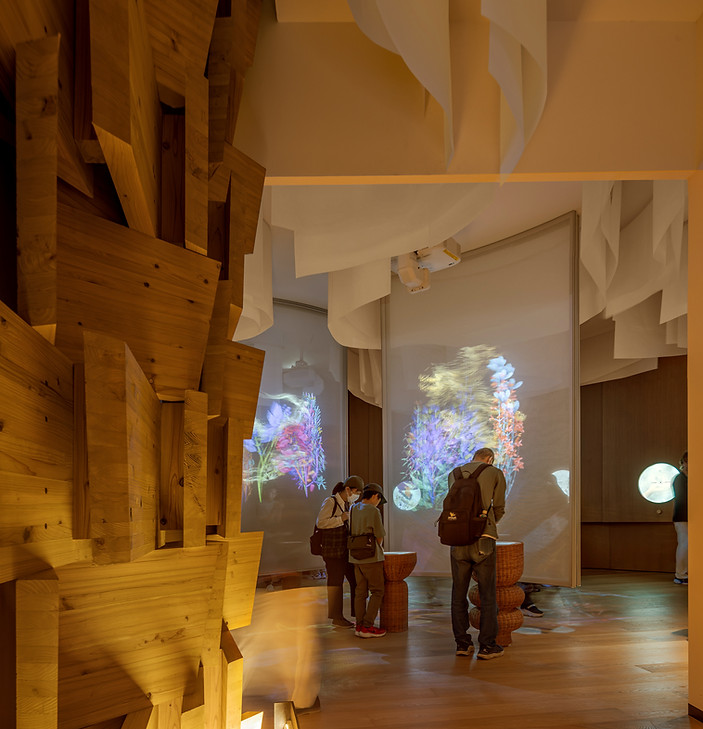
1. Spirit Plant
Arthor: Marcin Ignac

2. Seven Herbs
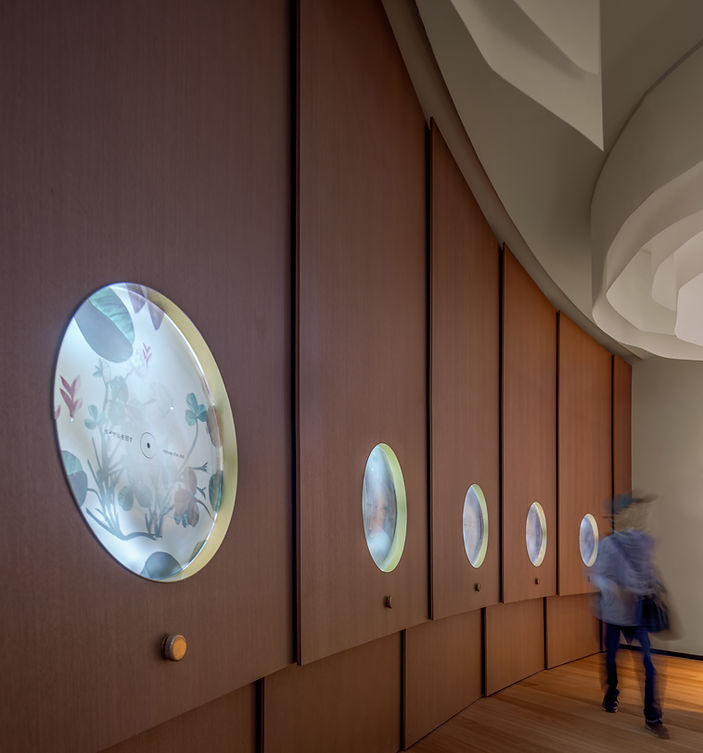
Illustrators: Kasia Walentynowicz, Monika Hanulak,
Patrycja Podkościelny


3. The Most Polish Landscape
Authors: Szymon Pepliński,
Wiesław Bartkowski


4. Pre-Spring
Authors: Urszula Zajączkowska,
Megi Malinowsky


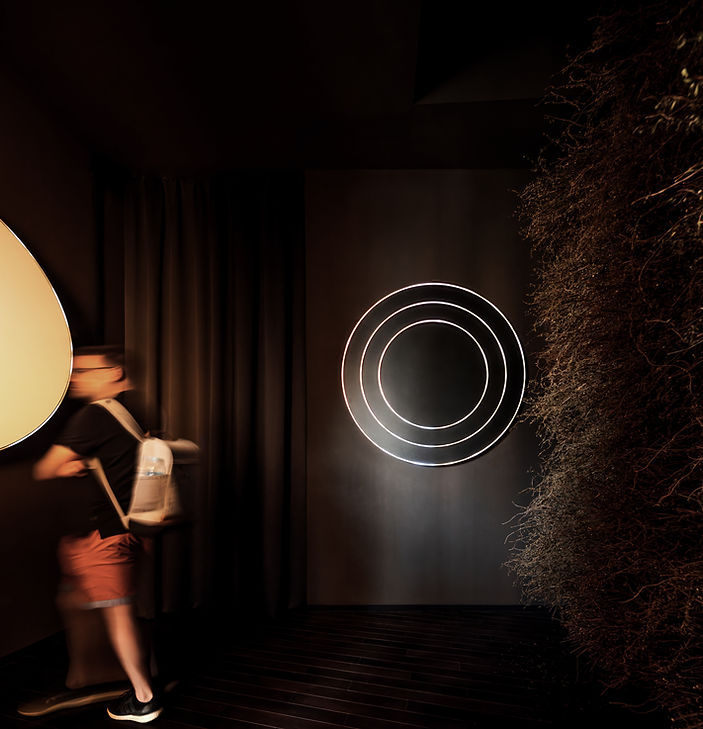
5. Sound of Matter
Authors: IP Group
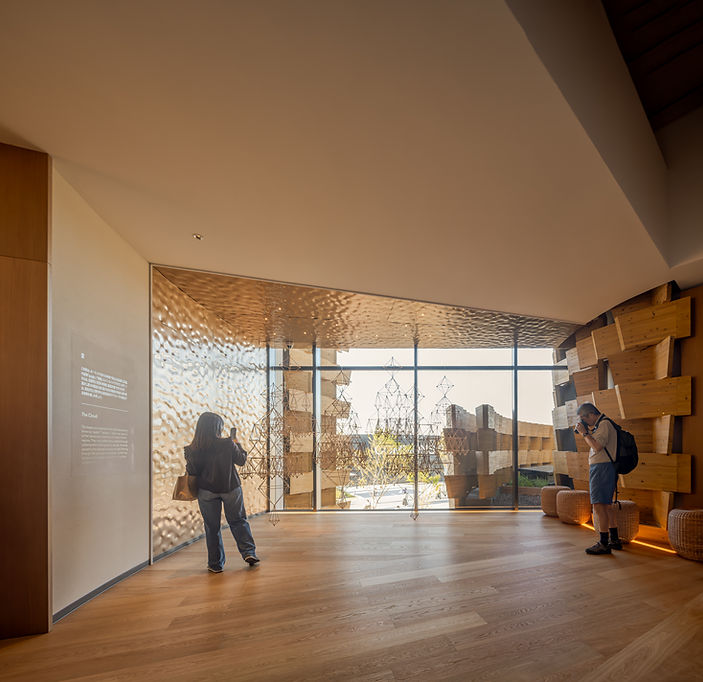
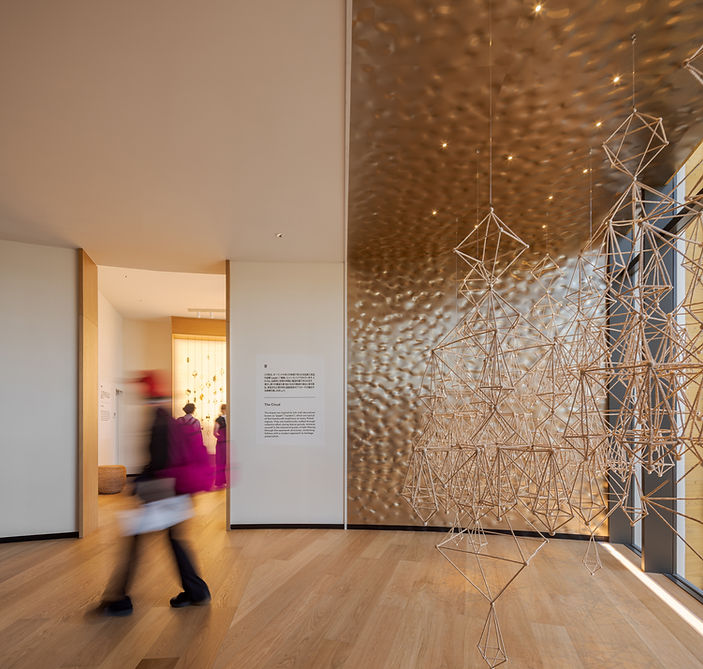
6. Cloud
Author: Hanna Stano
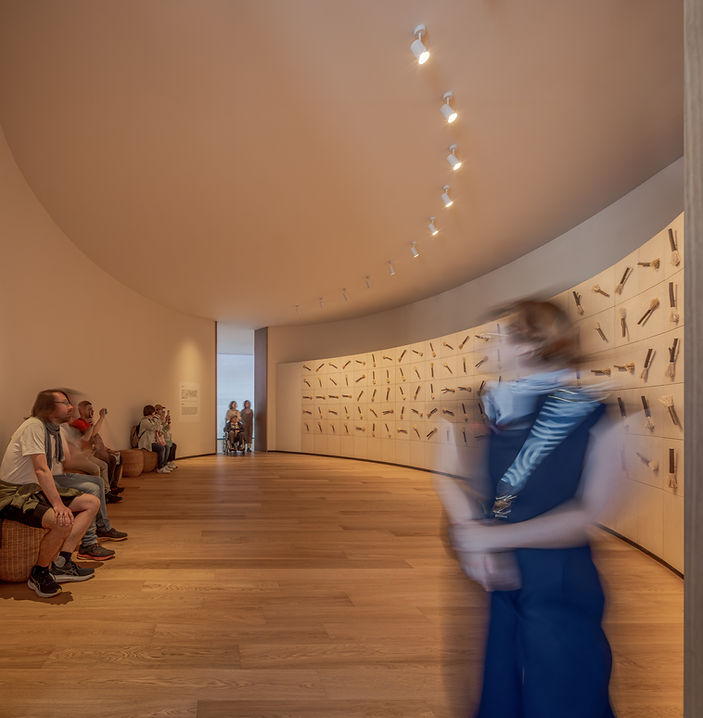
7. Aura
Authors: Olga Milczyńska,
Wiesław Bartkowski,
Jerzy Rogiewicz

8. Plantation of Ideas
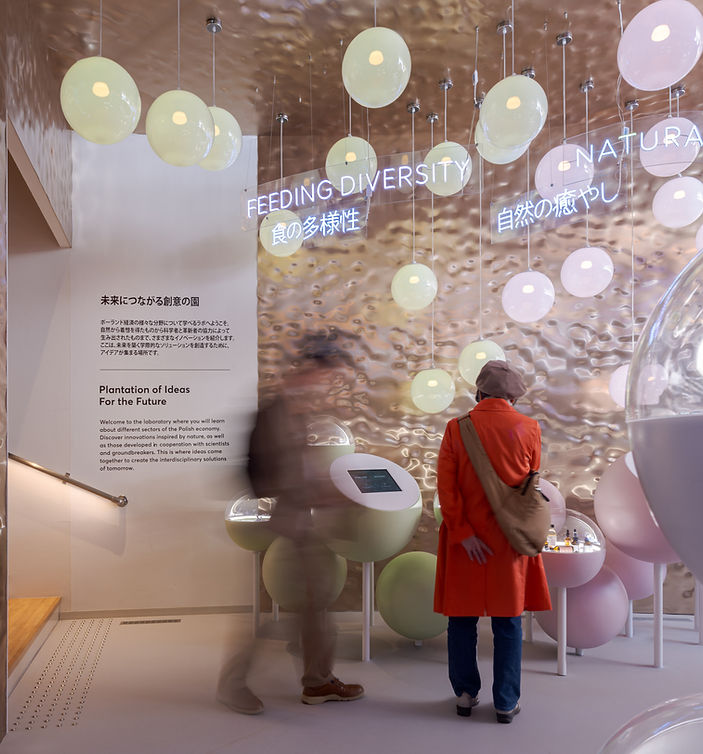
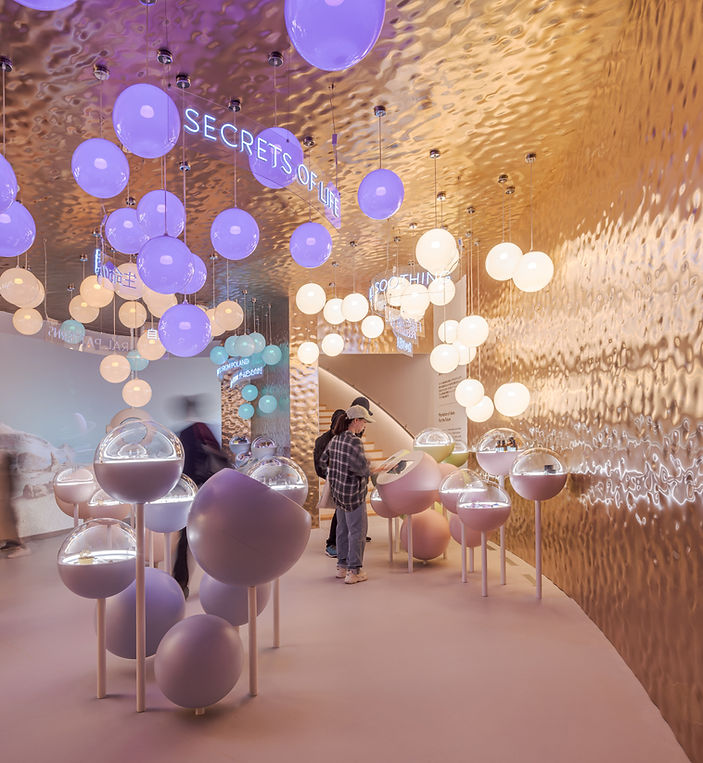


Above, Photo1: Fernando Guerra
Below, Photo2: Masaki Suzuki


9. Generations
Author: Martin Ignac

10. Verses
Poets: Krzysztof Czyżewski,
Krystyna Dąbrowska,
Jacek Dehnel,
Jerzy Jarniewicz,
Barbara Klicka,
Jakub Kornhauser,
Małgorzata Lebda,
Urszula Zajączkowska

11. Nest
In partnership with
The Fryderyk Chopin Institute


"Heritage that Drives the Future"
As a Japanese first-class architectural firm, we provided design support for the exhibition design of the Poland Pavilion, created by Polish designers and artists. The pavilion’s installation, realized through the collective expertise of specialists across multiple disciplines, conveyed the creative DNA inherited by the Polish people through a multisensory experience. Within this wondrous environment—where nature, tradition, and science intertwine—visitors not only immerse themselves in the space but also actively participate in co-creation through digital devices.
For example, in "Spirit Plant", visitors make a series of selections via a touch panel, which are processed by an algorithm as mediating variables and visualized as a unique “plant of the mind” projected onto a translucent screen. The resulting plant, interpreted as a medicinal herb expressing one’s inner state, can be downloaded to a smartphone or shared on social media.
Other installations, such as "Pre-Spring", which encapsulates the fleeting transformation of plants native to Poland within resin spheres, also center on natural materials and vegetation. Together, these works form an exhibition space that reveals shared sensibilities between Japan and Poland.
This project was awarded the Gold Prize in the Exhibition Design category for self-built national pavilions under 1,500 m² at an award organized by the Bureau International des Expositions (BIE).
In addition, at the World Expolympics organized by The Experiential Design Authority, the pavilion received the Bronze Prize in the Medium-Sized Pavilion category for Architectural Design, and the Silver Prize in the Exhibition Design category for the exhibition space "Plantation of Ideas".